


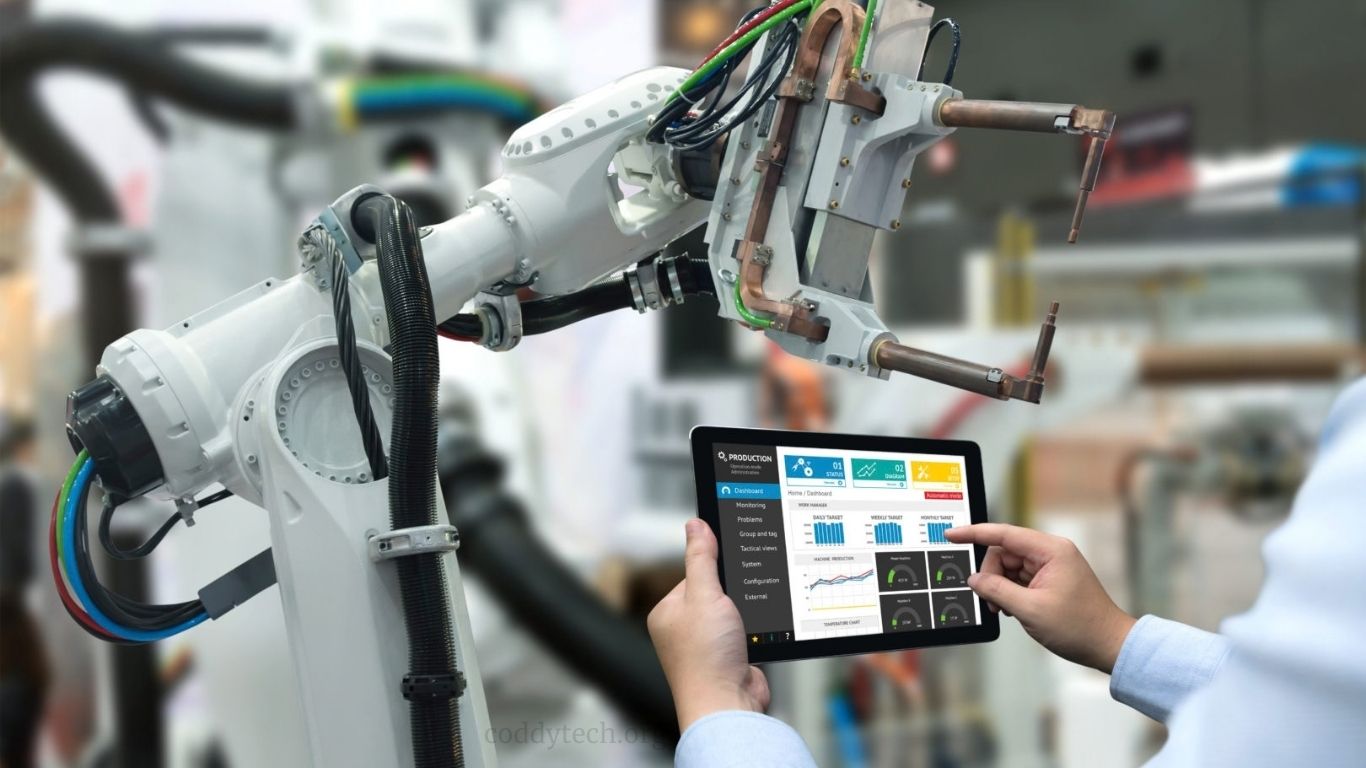
Robotics programming is the process of creating software instructions that control how robots operate, move, sense their surroundings, and respond to different situations. It combines programming with electronics, mechanical engineering, automation, and artificial intelligence to create machines capable of performing specific tasks with limited or no human intervention.
Today, robots are used in manufacturing, healthcare, agriculture, logistics, education, research, and many other industries. From robotic arms assembling products to autonomous machines moving around warehouses, programming provides the intelligence that allows these systems to perform useful actions. As automation continues to expand, learning robotics programming can be valuable for students, developers, engineers, and technology enthusiasts.
What Is Robotics Programming?

Robotics programming involves writing and managing software that communicates with a robot’s hardware. A program can tell a robot when to move, how fast a motor should rotate, how to respond to sensor information, and what action should be performed when a particular condition is detected.
For example, imagine a small robot designed to avoid obstacles. Its sensors detect an object in front of it, while the program processes that information. If the distance between the robot and the object becomes too small, the program can instruct the robot to stop, turn in another direction, and continue moving.
This interaction between software and physical hardware makes robotics programming different from many traditional programming tasks. A robotics programmer must consider both the digital instructions and the physical environment in which the robot operates.
How Robotics Programming Works
A robotic system normally contains several components that work together. Sensors collect information from the environment, while a controller or computer processes that information. The software then determines what action should be taken and sends commands to motors or actuators.
This process can be understood through a simple sense, process, and act cycle. The robot first senses its environment through cameras, distance sensors, encoders, or other devices. The programming then processes the collected information. Finally, the robot performs an action based on the result.For example, an autonomous mobile robot may use a camera and distance sensors to identify obstacles. Its software processes this information and calculates a safe path. The motor controller then receives instructions that move the robot along that path.
Programming Languages Used in Robotics

Python for Robotics
Python is one of the most popular programming languages for people learning robotics. Its simple syntax makes it relatively easy to understand, while its extensive collection of libraries makes it useful for automation, artificial intelligence, computer vision, mathematics, and data processing.Python is frequently used for robotics research, prototypes, simulations, and high-level robotic applications. Beginners can use Python to understand programming concepts before moving into more complex robotics software.
C++ for Robotics
C++ is another major programming language used in robotics. It is particularly valuable when a robotic application requires high performance, efficient resource management, and fast communication with hardware.Many advanced robotics frameworks and applications use C++ because robotic systems sometimes need to process sensor information and control hardware with very little delay. Developers working with autonomous robots, navigation systems, robotic arms, and computer vision may encounter C++ frequently.
C and Embedded Programming
C is commonly associated with embedded systems and microcontrollers. Many small robots use microcontrollers to operate motors, read sensors, and control electronic components.Learning C or C++ can help robotics students understand how software interacts with hardware at a lower level. This knowledge is particularly useful when working with Arduino-based projects and other embedded systems.
Other Programming Languages
Other languages, including Java, MATLAB, and JavaScript, can also have roles in robotics. MATLAB is particularly useful for mathematical modeling, simulations, research, and control-system development. Java and JavaScript can be used in specific robotic applications depending on the development environment and project requirements.
The most important goal for a beginner is not to learn every programming language. Developing strong programming fundamentals in one suitable language provides a better foundation for progressing into robotics.
Sensors in Robotics Programming
Sensors are essential because robots need information about their surroundings and their own physical condition. A robot without appropriate sensors may have difficulty understanding what is happening around it.
Distance sensors can help a robot determine how close an object is, while ultrasonic sensors can detect obstacles. Cameras provide visual information, and accelerometers and gyroscopes can help measure movement and orientation. Encoders can provide information about motor rotation and wheel movement.Robotics programming is responsible for receiving this information and turning raw sensor readings into useful decisions. In advanced systems, sensor data from several devices may be combined to provide a more accurate understanding of the environment.
Motors and Actuators
Motors and actuators allow robots to physically interact with their surroundings. A program can control the direction, speed, and movement of motors according to the requirements of the task.
For example, a wheeled robot may use two motors to move forward, reverse, and turn. A robotic arm may contain several motors that control individual joints. The programming must coordinate these components so that the robot reaches the desired position accurately.Motor control becomes increasingly important in advanced robotics because even a small programming error can cause inaccurate or unexpected movement.
Robot Control Systems
Robot control refers to the methods used to make robotic systems perform movements accurately and consistently. A basic system may send a simple command to a motor, while an advanced control system continuously monitors the robot’s actual movement and compares it with the desired movement.
Feedback is an important part of robotic control. Sensors can provide information about the robot’s current position or speed, allowing the software to make adjustments when necessary. This approach is commonly used in robotic arms, autonomous vehicles, drones, and industrial automation.
Computer Vision in Robotics
Computer vision allows robots to obtain information from cameras and interpret visual data. Through programming, a robot can be designed to detect objects, recognize patterns, track movement, identify colors, or estimate the position of objects.
For example, a warehouse robot could use a camera to recognize packages and determine where they should be transported. An agricultural robot could use computer vision to distinguish plants from surrounding areas.Computer vision is becoming increasingly important as robots are expected to operate in environments that are more complex and less predictable.
Robotics Programming and Artificial Intelligence
Artificial intelligence is becoming an important part of modern robotics programming. Traditional robotic programs generally follow predefined rules, while AI-based systems can process large amounts of information and perform more advanced recognition and decision-making tasks.
Machine learning can help robots identify objects, recognize images, predict movement, or improve their performance using data. For instance, an agricultural robot may use machine learning to identify crops, while a warehouse robot may use intelligent navigation techniques to determine suitable routes.Artificial intelligence does not replace traditional robotics programming. Instead, it can work alongside sensors, controllers, motors, navigation systems, and conventional software to create more capable robotic systems.
Robot Operating System and Robotics Frameworks
Modern robotics projects can become very complex because they may involve numerous sensors, motors, cameras, controllers, and software components. Robotics frameworks can simplify development by providing communication systems, libraries, tools, and reusable components.
Robot Operating System
The Robot Operating System (ROS) is one of the most widely recognized frameworks in robotics development. Despite its name, ROS is better understood as a collection of software tools and libraries that help developers create robotic applications.
ROS allows different parts of a robotic system to communicate with each other. For example, camera software can provide information to navigation software, while navigation software can send movement commands to a motor controller.
Arduino for Robotics
Arduino is widely used in beginner robotics projects because it provides an accessible way to experiment with microcontrollers, sensors, motors, LEDs, switches, and other components.A beginner can use an Arduino board to build a simple obstacle-avoidance robot or line-following robot. Such projects provide practical experience with programming and hardware interaction and can make abstract programming concepts easier to understand.
Raspberry Pi for Robotics
Raspberry Pi computers are also popular in educational and experimental robotics. Unlike many basic microcontrollers, a Raspberry Pi can run a full operating system and support programming environments such as Python.
This makes it useful for projects involving cameras, networking, computer vision, data processing, and higher-level robotic applications. A Raspberry Pi can also communicate with external microcontrollers and electronic components.
How to Learn Robotics Programming
Start With Programming Fundamentals
A beginner should first understand fundamental programming concepts such as variables, conditions, loops, functions, data structures, and error handling. These concepts form the foundation of almost every robotics programming project.Python can be a practical starting point because its syntax is relatively easy to read. Once basic programming becomes comfortable, learners can begin applying those concepts to sensors, motors, and robotic platforms.
Learn Basic Electronics
Understanding basic electronics can make robotics programming much easier. Beginners should gradually learn how microcontrollers, sensors, motors, switches, and circuits work.This knowledge is useful when troubleshooting a robot because a problem may not always be caused by software. Incorrect wiring, power problems, faulty sensors, or motor issues can also affect robotic behavior.
Build Practical Robotics Projects
Practical projects are one of the most effective ways to develop robotics programming skills. A beginner can start with a simple robot that follows a line or avoids obstacles and then gradually move toward more advanced projects involving cameras, autonomous navigation, or robotic arms.Building projects allows learners to practice programming while seeing the physical results of their code.
Practice With Robotics Simulators
Robotics simulation allows programmers to test robotic systems in virtual environments. Simulation can be useful when physical hardware is unavailable or when developers want to test algorithms before running them on an actual robot.It also allows programmers to experiment with navigation, movement, sensors, and control systems without the cost or risk associated with physical equipment.
Challenges in Robotics Programming
Robotics programming presents several challenges because software interacts with the real world. Sensor readings can contain noise or inaccuracies, which means programs often need to filter and validate data before using it.
Timing is another important challenge. Some robotic operations must happen within very specific time limits. Delays in sensor processing or communication can affect a robot’s movement and performance.Debugging can also be more complicated than traditional software development because a problem may come from programming, electronics, communication, mechanical components, or a combination of these factors. Successful robotics development therefore requires systematic testing and troubleshooting.
Applications of Robotics Programming
Manufacturing and Industrial Automation
Robotics programming is widely used in manufacturing. Industrial robots can perform tasks such as assembly, welding, packaging, material handling, and quality inspection.Programming allows these machines to perform repetitive operations with consistent instructions and coordinate their movements with other production equipment.
Healthcare and Medical Technology
Robotic systems are also being developed for healthcare applications. Depending on the system, robots can support rehabilitation, laboratory automation, medical research, logistics, and specialized clinical procedures.Programming is essential because these applications often require precise movement, sensor feedback, and controlled interaction with people and equipment.
Agriculture
Agricultural robotics uses programming to support crop monitoring, precision farming, automated harvesting, and field navigation. Robots can combine cameras, sensors, GPS technology, and intelligent software to perform tasks in agricultural environments.
Warehousing and Logistics
Warehouses increasingly use automated robotic systems to move products and materials. These robots rely on programming for navigation, obstacle detection, route planning, and communication with warehouse systems.
Future of Robotics Programming
The future of robotics programming is closely connected with artificial intelligence, machine learning, computer vision, edge computing, and autonomous systems. Robots are becoming capable of processing more information and operating in increasingly complex environments.
Developers will increasingly need to understand both traditional programming and intelligent technologies. However, fundamental robotics concepts such as sensor processing, motor control, communication, algorithms, and debugging will remain important.As robotics expands into new industries, the demand for people who can develop, test, maintain, and improve robotic systems is likely to remain significant.
Frequently Asked Questions
Is Robotics Programming Difficult for Beginners?
Robotics programming can initially seem challenging because it combines software with physical hardware. However, beginners can make steady progress by learning programming fundamentals first and then applying those skills to simple robotics projects.
Which Programming Language Is Used Most in Robotics?
Python and C++ are two widely used languages in robotics. Python is popular for learning, prototyping, artificial intelligence, and higher-level applications, while C++ is frequently used when performance and efficient hardware interaction are important.
Can I Learn Robotics Programming Without a Degree?
Yes, many robotics programming fundamentals can be learned independently. Online courses, documentation, programming exercises, electronics projects, simulators, and practical robotics kits can provide valuable experience.
Is Python Good for Robotics?
Yes, Python is useful for many robotics applications. It is commonly used for prototyping, automation, artificial intelligence, computer vision, data processing, and high-level robotic software.
What Should I Learn Before Robotics Programming?
Basic programming and problem-solving skills provide a useful starting point. Learning basic electronics and mathematics can also help, but beginners can develop these skills gradually while working on robotics projects.
Conclusion
Robotics programming connects software with physical machines and allows robots to sense their surroundings, process information, control movement, and perform useful tasks. It combines programming, electronics, control systems, sensors, motors, artificial intelligence, and mechanical concepts.
For beginners, learning robotics does not require mastering every technology immediately. Starting with programming fundamentals, learning basic electronics, experimenting with Arduino or Raspberry Pi, and building simple projects can provide a strong foundation.As automation, artificial intelligence, and autonomous systems continue to develop, robotics programming will remain an important technology for creating machines capable of performing increasingly complex tasks.
